


WORLD WAR I
To chapter 1 – The Vignacourt 14-18 Interpretation Centre
To chapter 2 – Two Couples, a Century Apart: the Thuillier Farm in Vignacourt
To chapter 3 – The Chinese Cemetery of Nolette – The War’s Unsung Heroes
Zum Kapitel 4 –Die unterirdische Stadt von Naours – Eine fast vergessene Welt
Zum Kapitel 5 – Das Caudron-Museum – Pionniere de Luftfahrt
Zum Kapitel 6 – Haus Sadi Lecointe – Auf den Spuren von Männern und Frauen, die alles riskierten
ZUR LANDKARTE


CHAPTER 1
The Vignacourt 14-18 Interpretation Centre
From Farmhouse to Memorial: Ein Museum würdigt die Menschlichkeit der Soldaten des Ersten Weltkriegs
The small village of Vignacourt, home to some 2,300 inhabitants, holds a more than a century old, created by a couple of farming entrepreneurs. Sometimes, understanding the true value of things requires perspective; the story of Louis and Antoinette Thuillier is a perfect example. Their story begins in the 1910s in a French village north of Amiens, where fishing nets were made, and people still traveled by foot, horse, or bicycle, and where a young man acquired a large bellows camera mounted on a tripod – a heavy, expensive, and rare piece of professional equipment at the time.


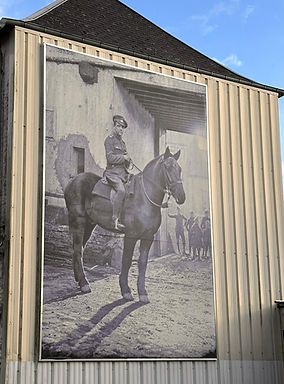

"Monsieur Peugeot" and His Lens: From Peace to War
Louis Thuillier (1886–1931), a small farmer and skilled mechanic, rented out agricultural machinery. On the façade of his farm hung a flag sign reading "Cycles Peugeot," which may have earned him the nickname "Monsieur Peugeot" among the villagers. One day, he decided to buy a camera. The young man in his early twenties taught himself photography and soon added the word "Photo" to the transom window above the entrance of the large white-stone house with green shutters. Louis practiced by taking portraits of the villagers — quite a sensation at a time when photography, especially in rural areas, was costly and uncommon. In 1912, Antoinette (1891–1974) gave birth to their son Robert (1912–1996). This peaceful life might have continued had war not broken out on 28 July 1914, followed by general mobilisation in France on 1 August.
As a dispatch rider, Louis became a liaison agent between the front line and the rear. Antoinette remained alone at the farm with Robert. Soon, after being wounded in the leg, Louis was permanently discharged and returned home to a village where the sound of artillery fire could be heard just a few kilometers away. The war was never far, haunting the traumatized Louis. Soldiers passed through the village in endless streams, heading to Artois, where death would claim them by the thousands in the spring of 1915. When regiments stopped by, Louis began photographing the soldiers, resuming his activity as a photographer to compensate for the heavy loss of income caused by the war.
A Couple, Two Styles


The couple welcomed passing soldiers into their farmyard, photographed them, and printed postcards for the soldiers to send to their families. While a farmyard was no city studio, it offered an authentic setting, and the price was much more affordable. At that time, Louis had the idea of teaching his wife photography. Antoinette proved to be a revelation. Louis had a rather classic style: he mainly photographed groups or took his bulky camera to work outside the farm. This expensive professional equipment allowed him to produce technically flawless images, but not spontaneous snapshots
such as those already made possible at the time by smaller portable cameras like the Vest Pocket Kodak with roll film, used by soldiers (typically from well-to-do families) and reporters.
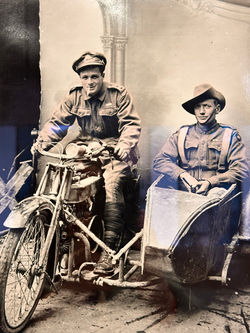
Antoinette’s eye for the men she photographed, often with humor and poetry, restored their humanity as sons, fathers, husbands, brothers, and friends, momentarily overshadowing the omnipresence of the uniform. She captured joyful, laughing, dynamic expressions full of hope, as well as hollow, stunned gazes dulled by the horrors of the trenches. Yet, many of her photographs almost make one forget the drama unfolding just kilometers from Vignacourt, which had become a veritable barracks with camps for soldiers on leave or en route to combat zones. The war dragged on, and a daily routine settled in. Romances blossomed, friendships formed, and nostalgia for family grew. All of this is reflected in Antoinette’s work, which features soldiers with children (her son Robert appears in dozens of photos), men posing with animals, on motorcycles or horses, smoking, or with villagers. Almost always, her photos include a detail reminding viewers that, at the gates of hell, life in Vignacourt continued: curious children, a pecking hen, a boy lost in contemplation of the photographer, while three soldiers casually pose on motorcycles, one playfully aiming a revolver at the others.


Most of the men were Australian and British, as the village was under British command. However, soldiers from about thirty nationalities passed through Vignacourt, and the couple photographed them throughout the war: Chinese workers staged in martial arts poses, amateur actors, elegantly turbaned Indians, Moroccans in tarbooshes, Scots in kilts, and more.
November 11, 1918: From Euphoria to Buried Memories
Life for Louis and Antoinette continued until November 11, 1918, the day the Great War ended. Louis photographed the scenes of jubilation, capturing the exultation in a "motion blur" that conveyed the explosive euphoria of the moment. It was then that three soldiers climbed the church steeple to hoist a French flag. Louis photographed the tricolor rectangle, but above all, he immortalized that timeless moment at the foot of the church: suddenly, heads turned in unison, the crowd froze, eyes fixed on the flag, a symbol of regained peace.
 |  |  |
|---|---|---|
 |  |  |
The war was over, and a week later, civilians and soldiers gathered at the cemetery for a tribute ceremony as the troops prepared to return home. The mayor at the time, Paul Thuillier-Buridard, promised that the women and children of the village would each choose one of the 500 graves—mostly Australian—to tend for the rest of their lives. Louis photographed the processions of soldiers and civilians and took pictures of the graves to send to the families. In 1919, Louis and Antoinette abruptly abandoned photography. The luxurious studio backdrop with a neoclassical column that Louis had acquired to avoid photographing men against the farm’s crumbling walls, the expensive camera, and entire trunks of glass negatives were stored in the attic, where they would remain for nearly a century. Then, in 1931, Louis, suffering from depression, took his own life. Little else is known about him, Antoinette, or Robert, who never married and remained by his mother’s side until her death in 1974.
A Century of Silence: The Incredible Fate of Louis and Antoinette’s Photographs
During the thank-you ceremony, Paul Thuillier-Buridard had promised to rename streets after Australian cities. The promise was not kept. It was another mayor, Michel Hubau, who fulfilled it. While consulting the village archives 70 years later, he discovered the 1918 speech. In 1988, he inaugurated the new streets during a festival attended by Australians. A group of veterans then asked Robert to develop a few of his parents’ photographs for an exhibition in the village hall. Though the Thuilliers’ treasure lay dormant in the attic at 196 Rue d’Amour, it was never forgotten. Yet no one fully grasped its immense value. After the exhibition, the photos were displayed on the walls of the town hall, where historian Laurent Mirouze discovered them in 1990 while researching the rear front. He met Robert, who told him the story of the photographs, published articles, and made numerous unsuccessful attempts to interest France and Australia in his discovery. Several more years passed before he finally succeeded in 2011, attracting a team of Australian journalists.


By then, Robert had been dead for about 15 years. Christian, his nephew and heir, welcomed the reporters, who discovered around 4,000 carefully stored glass plates in the attic. Kerry Stokes, head of their Seven Network, acquired them and donated them to the Australian War Memorial in Canberra, where they are now preserved. The plates were digitized and returned to the village of Vignacourt. The studio backdrop against which Louis and Antoinette photographed so many soldiers – Antoinette, who so willingly stepped outside the elegant but artificial neoclassical frame to create images far removed from the kitsch propaganda of professional studios – is also preserved in Canberra. Through her sensitivity, Antoinette restored the soldiers’ humanity.
A Museum, a Story to Discover, and Many Projects: The Rebirth of the Thuillier Farm
Today, Valérie Vasseur and Angèle David, along with their intern Charlotte Bilou, welcome visitors to the old Thuillier farm. In 2012, the municipality recognized the heritage value of the site and acquired it. Now owned by the town of Vignacourt, a museum dedicated to the work of Louis and Antoinette was created and inaugurated in 2018. Thanks to the commitment of an Australian couple, Michael and Donna Fiechtner, funds were raised to renovate the old house and its outbuildings, including the creation of guest rooms. The passion and expertise of Valérie and Angèle, supported by the association Le Monde d’Antoinette, have made the interpretation center a lively and captivating place, telling a story of history through the lens of everyday life—a time when, despite language and cultural barriers, men and women came together to forget the horrors of war.
Infobox 1
During World War I, the village of Vignacourt hosted thousands of Australian soldiers. Located behind the Somme front and well-served by the railway to Amiens, it served as a rest and billeting area for troops of the Australian Imperial Force (AIF) between combat periods. After the Gallipoli campaign, the Australian expeditionary corps was deployed to France. Between 1916 and 1918, thousands of these volunteers passed through Vignacourt, leaving a lasting mark on the village’s history and memory.

Infobox 2
Like Christine Spengler or Gerda Taro later on, Antoinette captured the humanity behind the uniform, offering a unique perspective on conflict. Rather than focusing on action or the heroism of battle, they often prioritized the human element, photographing the everyday reality of war: faces, silences, civilians, and the vulnerability of soldiers. Their approach revealed an intimate experience of war, shaping a more personal and human memory of conflict. While Antoinette did not photograph combat zones, she too offered a different view of the men, restoring their humanity.
February 2026
More information:
1914-1918, le trésor oublié d’Antoinette et Louis
A beautiful documentary by Anne Mourgues (in French)
Centre d'interprétation Vignacourt 14-18
196 rue d’Amour
80650 Vignacourt
Opening Hours:
High season (April to October):
Tuesday to Friday: 10:00 AM–6:00 PM Saturday and Sunday: 2:00 PM–6:00 PM
Closed on Mondays and public holidays
Low season (November to March):
Tuesday to Saturday: 1:30 PM–5:00 PM Closed on Sundays, Mondays, and public holidays
Tel.: +33 6 73 69 55 49
E-Mail: vignacourt1418@gmail.com
Internet: Vignacourt 14-18
Facebook: Vignacourt 14-18
Instagram: Vignacourt 1418

CHAPTER 2
The Thuillier Farm
Two Couples, a Century Apart: the Thuillier Farm in Vignacourt
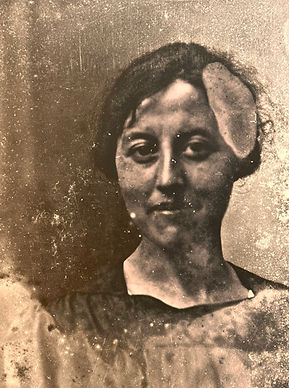
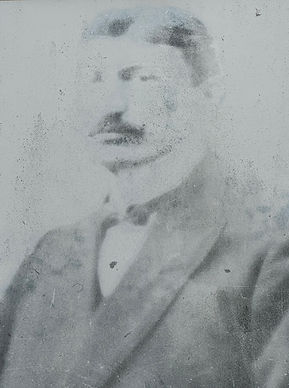
Step inside the old Thuillier farmhouse and you'll quickly realise that 'old' barely captures its essence. The atmosphere of this building bears such a strong imprint of the women and men who once lived here or passed through. Despite the relentless passage of time, it has retained a breath of life – a soul that captivated Michael and Donna Fiechtner, an Australian couple who fell in love with it. They made it their mission to restore and preserve this soul, to strengthen the bond between yesterday and today. This commitment led them, at sixty-six, to retire from teaching, leave Brisbane, and settle in Vignacourt. Their vision is to breathe new life into this house, to reinvent it as a guesthouse – a home that, more than a century ago, belonged to Louis and Antoinette Thuillier: : a couple whom the Great War turned into professional photographers for the duration of the conflict that would reshape the world, and who, through their photographs, revealed the humanity of the soldiers.

Bottles from another time and a bright idea
In the kitchen, where we have settled down for the interview, a whole battalion of old bottles is patiently waiting for a good clean. Some are so old that the inscriptions on their bodies were ground directly into the glass; others, unmistakably from the 1960s and 70s, are still filled with table wine and topped with gold-coloured aluminium caps, beneath which small translucent plastic capsules peek out, like tiny straw hats. The kitchen window looks out onto the farm’s former barn, now renovated and, a century after the end of the First World War, home to the Vignacourt 14-18 Interpretation Centre. Everywhere, portraits of soldiers who were once billeted in the rear areas around Vignacourt catch the eye.

Antic Bottles

Full Antic Bottles

Never forget home.
Antic Bottles
Donna and Michael explain to me what the old bottles now taking pride of place in the kitchen have to do with the Israeli-American-Iranian conflict that broke out in the winter of 2026, shortly before they left for Europe. This geopolitical upheaval changed the course of their project when companies, suddenly forced to be more cautious with their finances, froze the donations they had pledged towards the restoration of the Thuillier farm. Without giving up hope that these generous donors would lend them a hand again once the crisis was over, the couple immediately began looking for other sources of funding. Since then, Donna and Michael have shown considerable ingenuity in finding ways to bring their project to fruition, demonstrating along the way that every donation
counts, whatever the amount. So, when they discovered old bottles that had been lying forgotten in the cellar for decades, the idea of cleaning them up and selling them soon took root.
One day, they will adorn a wall. Labels bearing the names of their purchasers will serve as tokens of gratitude, reminding all that every brick in the building, however modest, helped build their dream. Michael announces, with no little pride, that they have already raised a few thousand euros from the sales – a welcome contribution towards buying the windows that are to be replaced first.
How it all Began
Nothing in particular suggested that Michael and Donna would ever travel to France, let alone settle there permanently. It is true that Donna had once been told that, as a child, she used to say she would live in France one day, but she has no recollection of it herself. And it was certainly not a desire to travel that prompted the couple to set off, but a highly unusual circumstance.
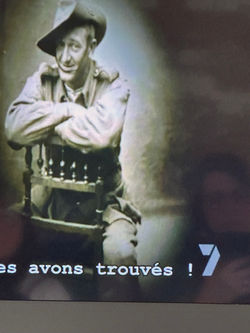
Around 2010, Alicia, Donna’s niece, began dreaming every night that three Australian soldiers from the First World War were standing at the foot of her bed, staring intently at her. She asked her aunt whether any members of the family had served during the Great War. Donna knew nothing about it, but her mother told her that three of her great-uncles – two on her mother’s side and one on her father’s – had been among the so-called “Diggers”*. Two of them had been killed in the war, while the third returned home suffering from severe post-traumatic stress disorder. Although Donna’s mother, born in 1921, had never known the three men herself, she was able to give her their names.
 |  |  |
|---|---|---|
 |  |
These young men had probably left in 1915, driven by a mixture of youthful carelessness and loyalty to the “British Empire”. Did they, like so many others, imagine that the war would be over quickly, that the gates of Paris would then stand wide open to them and that they would return home afterwards with a wealth of stories to tell? They set off alongside other young idealists hungry for honour and adventure. No one could have imagined that the conflict would eventually claim the lives of more than 60,000 of the 330,000 Australians sent overseas, including 46,000 on the Western Front in France and Belgium.
Around the time Donna learned of the existence of her three great-uncles, her son was travelling through Germany in a motorhome and planning to make a detour into France. She asked him to visit the cemetery at Caëstre, close to the Belgian border. One of her uncles, a certain McKenzie, was buried there. On 1 May, the anniversary of McKenzie’s death, her son stood at his grave. After that, the three soldiers stopped appearing at the other end of the world.
Nevertheless, in a way, they were the catalyst for the regular trips Donna and Michael subsequently made to France. Before long, they began taking other Australians with them to discover the historical links that connected them with northern France, helping them find the ancestors who had fallen in the war.
A year later, the couple came across a 2011 report by a team from Australian television network Channel Seven about a collection of more than 4,000 photographic glass plates that had been discovered at the former farm of Louis and Antoinette Thuillier in Vignacourt and featured photographs of Australian soldiers. That was all it took to awaken the curiosity of the two history enthusiasts and draw them to this village in the Santerre, which during the First World War lay behind the front around Amiens.


* Just as French soldiers were known as “Poilus” and British soldiers as “Tommies”, “Diggers” was the nickname given to Australian soldiers. The word literally means “those who dig” and is particularly associated with their experience of trench warfare, although its exact origin remains uncertain.
The Birth of a Passion
When Donna and Michael first came to Vignacourt in the early 2010s for the Anzac Day commemorations**, they were welcomed by a young woman named Lucille Werkin. At the time, she was director of the Maison des Australiens in Vignacourt. She had been working with a group of teenagers on Louis and Antoinette’s photographs and, together with them, was helping to keep alive the memory of the soldiers who had come from the other side of the world to defend France.
This marked the beginning of a series of school exchanges between French and Australian teenagers, as well as visits during which the couple introduced their fellow Australians to Vignacourt and the sites associated with the First World War. At the time, the Vignacourt 14-18 museum did not yet exist. It opened in 2018 in the renovated former barn of the farm. The house, however, was left to its own devices for lack of funding. Donna and Michael had long since fallen in love with the building. There were plans to renovate it, but the local authority was unable to raise the approximately € 800,000 required for the work. In 2023, the council was even forced to consider demolishing it.
For the Australian couple, allowing the house to disappear was unthinkable: it had to be saved. From then on, they moved heaven and earth to make it happen, and their efforts were rewarded in December 2025 with the signing of a twenty-year lease. The aim is to turn the Thuillier house into a café and guesthouse, and to open it to the public for Anzac Day 2028. At the end of the twenty years, they will hand the site back to the town, which will incorporate it into its heritage.
** Anzac Day, held on 25 April, is a national day of remembrance in Australia and New Zealand. It honours the soldiers of the Australian and New Zealand Army Corps and commemorates the landing at Gallipoli on 25 April 1915, as well as the conflicts in which Australian and New Zealand troops took part, particularly in the Hauts-de-France region.
A Glass Sometimes Half Empty, Sometimes Half Full – But an Unwavering Determination
After retracing the journey that led Donna and Michael to settle in France, they invite me to tour the house. We move through rooms where pigeons had long reigned supreme. The couple certainly didn’t evict them willingly, but somewhere, after all, one had to start.
Here and there, the clay-and-wattle plaster on the façade has worn away, revealing the sky, while shafts of sunlight pierce the wall. It is a pity that a faithful restoration is impossible. The curtains at the windows gently sway in the breeze drifting through a number of broken or cracked panes. How can one imagine all that Antoinette, Louis and their two sons must have witnessed from these windows, beneath which so many stories unfolded?


Inside the rooms, the wallpaper is peeling away, revealing the newspapers once pasted underneath to reinforce it, with fragments of news from the 1950s emerging between the layers. The porcelain sockets and switches exude a wonderfully old-fashioned charm. Everything here begs to be renewed and preserved with the utmost care.
My two new Australian friends beam as they tell me about their plans: a guesthouse with an adjoining café. They want to turn it into a place of meeting and connection, a place of remembrance. Above all, they want to preserve this increasingly fragile house and pass on its history – a house that has survived both conflict and time. A place where foreign soldiers once caught their breath, if only for a moment, and became again the men they had been an eternity earlier: before the war. Here, through scenes in which they became actors themselves under Antoinette and Louis’s intuitive and perceptive gaze, they could catch a glimpse of ordinary life: holding a pitchfork, with a child on their lap, sitting on a motorcycle, wearing a mocking expression with a cigarette at the corner of their mouth, or mimicking an improvised fight. And yet, behind their shy or swaggering smiles, their challenging gazes or apparent indifference, as they sometimes looked into the camera with distant or sadness-veiled eyes, they must have been dreaming of returning home. Later, when they did return home, the survivors would carry with them a shared memory: the deeply human gaze of a couple who, themselves marked by war, had looked upon them as human beings.
That memory is still everywhere in this building today. It is preserved on thousands of glass negatives, rediscovered in the early 1990s thanks to historian Laurent Mirouze and fortunately rescued by Australian philanthropist Kerry Stokes. Recognising their immense historical value, he bought the collection and donated it to the Australian War Memorial in Canberra, making it accessible to the public. In all likelihood, he saved it from destruction. And that is precisely the memory Michael and Donna want their project to embody.
The Treasure in the Attic
The couple now leads me to the high point of the tour: the attic where the trunk containing the thousands of negatives was discovered. To get there, we have to take the narrow miller’s staircase opening onto the farmyard. It leads to the granary loft, from which grain was once channelled through hoppers into the mechanical mills that are still intact in the room below. Michael warns me that there are holes in the floor here and there. The structure itself is sound, however, so there is no danger. To reach the second level, where the trunk containing the glass plates once stood, we have to climb a curved, unguarded staircase that winds upwards and eventually opens into the roof space.
Exposed beams, cobwebs filtering the sunlight, dust accumulated over the years, an old safe bearing a sign reading “Le journal des percepteurs” (The Tax Collectors’ Ledger), jealously guarding its secret for now as the key remains nowhere to be found… everything here seems frozen in time. This is where Michael found glass plates. Donna and Michael suspect that more than a century ago, the couple may have placed them against the wall of the attic to dry, only to forget about them afterwards. Over the years, the house presumably shifted and settled, perhaps allowing the plates simply to slip behind the wall. The couple, at any rate, have not given up hope of finding more.
Through the skylight of what will one day become an attic bedroom with a hot tub, the church of Saint-Firmin in Vignacourt comes into view. Perhaps Antoinette and her children stood here on 11 November 1918, watching the flag that three intrepid soldiers had attached to the top of the church tower to announce the end of the war for all to see – a scene that Louis captured as it unfolded, photographing, among other things, the faces of the villagers turned towards the sky, stunned by such audacity, and their expressions still tinged with disbelief after so many years of suffering.
Today, more than a century later, 196 rue d’Amour is the birthplace of a project that bridges past and present. Each day brings its share of surprises, some good, others less so. Yet whether the glass is half full or half empty, Michael and Donna stand side by side, and in the end – hopefully for good – optimism always prevails. If you ever visit the neighbouring Vignacourt 14-18 museum, chances are you’ll find Michael and Donna there. Don’t hesitate to ask them questions, and if you feel inclined, get one of their vintage bottles to support their project.


Infobox
Before saying goodbye, Donna gave me a copy of her novel Photos in the Attic.Published in 2022, the book tells the story of two impossible loves: in Australia, that of Bill and Isabella, whose father will do everything in his power to keep the two lovers apart; and the love story between Bill and Rosie, a young nurse who has sought refuge with her cousin and his wife, Louis and Antoinette Thuillier, in Vignacourt, a village behind the front around Amiens.
The book also tells the story of Jimmy, Bill’s friend, of his struggles as an Aboriginal man to be accepted into the army and allowed to go to war, and of how he eventually came to be commemorated on his headstone as PRIVATE JAMES WALTON.
The story unfolds in Australia, on the Somme front, but also at the Thuillier couple’s farm. It tells of Louis’s post-traumatic disorder, of relationships that are formed and then broken, but above all of the psychological toll of war and the moments of respite when humanity resurfaces and, behind the soldiers, the men themselves become visible.
Photos in the Attic
Donna Fiechtner
BIG SKY PUBLISHING
Together with archaeologist Gilles Prilaux, they also published Shadows beneath the Somme – graffiti from the great war – La cité souterraine de Naours with Big Sky Publishing in 2023. The book tells the stories of 40 Australians who went to war and carved their names into the walls of the caves beneath the village of Naours.

Links:
The house of Thuillier
Hidden in Light - The House of Thuillier
Podcast
Why not! - Take a Chance! What happens next
Support:
CHAPTER 3
The Chinese Cemetery of Nolette
A Military Cemetery for Brave Men Who Were Not Soldiers


Among the countless military cemeteries scattered across the villages of the Somme, there is one that, despite appearances, is not quite what it seems.
Located in the heart of the countryside, the Chinese Cemetery of Nolette, a hamlet in the commune of Noyelles-sur-Mer, welcomes visitors on the left-hand side with a remembrance garden, poetically named “The Dimensions of Peace.” This minimalist space is reached via a gently sloping cobbled path, leading to a small promontory topped with a stone bench engraved with Chinese ideograms and French words, excerpts from the diary of Gu Xingqing, the translator of the Labour Corps, who described the scenes of celebration at the end of the war. This massive block seems to float above the horizon in winter, while in summer, backed by the corn stalks of the nearby field and flanked on either side by delicate grasses, it invites one to sit and surrender to the calm of this peaceful place, open as far as the eye can see in all four directions. I invite you to discover this remarkable site through a short journey in images and words, across these two seasons and through more than a hundred years of history. Let me take you to this remarkable site for a short journey through images and words, across two seasons and more than a century of history.
The Chinese Labourers of the Great War: Nolette, a Little-Known Chapter
The Chinese Cemetery of Nolette reminds us of a lesser-known episode of the First World War, when British allies recruited the Chinese Labour Corps in 1917 to provide logistical support to the fighting forces. These workers, enlisted for five years, were not soldiers. Nevertheless, they lived in camps under a quasi-military discipline, as evidenced by the identification numbers assigned to them, all engraved on the tombstones.
The Chinese Cemetery of Nolette reminds us of a lesser-known episode of the First World War, when British allies recruited the Chinese Labour Corps in 1917 to provide logistical support to the fighting forces. These workers, enlisted for five years, were not soldiers. Nevertheless, they lived in camps under a quasi-military discipline, as evidenced by the identification numbers assigned to them, all engraved on the tombstones.
These "coolies", nowadays a pejorative, racialized, and often offensive term used to refer to Chinese laborers, were also deliberately kept away from the local populations. Brought in to compensate for a severe manpower shortage in war-ravaged Europe, these men worked ten hours a day, seven days a week, except during Chinese New Year. They were deployed behind the front lines to unload and transport supplies, build and maintain infrastructure, repair equipment, or recover bodies from the battlefield.
After the war, their tasks included clearing unexploded shells, filling in trenches, and taking part in reconstruction efforts, such as rebuilding the village school in Nolette. In a climate of mutual distrust between Europeans and Chinese, violence was not uncommon. Out of the approximately 140,000* Chinese who came to France, only around 2,000* remained, forming the nucleus of today’s Chinese community in France.


Nolette, Final Resting Place of the Chinese Labourers of the Great War
Built in 1921 by the Commonwealth War Graves Commission (CWGC) and designed by British architect Edwin Lutyens –– who also created the Thiepval Memorial –– the Chinese Cemetery of Nolette is the largest of its kind in France and Europe.
It is the final resting place of more than 840 civilian labourers who died mainly from diseases, including the Spanish flu that struck between 1918 and 1919, but also from work-related accidents, malnutrition, cold, or poor hygiene. Some also lost their lives during operations carried out near or within combat zones.
The Memorial to the Missing of the Chinese Labour Corps
Built into the cemetery’s enclosing wall, a memorial honors around forty Chinese workers whose graves remain unknown. Each tombstone and the memorial wall bear inscriptions such as:
“A good reputation endures forever”, or “Faithful unto death”.
On the wall, one can also read: “Their glory shall not be blotted out” and “1914 – The missing of the Chinese Labour Corps – 1918.”
Nolette, A Place of Remembrance and Recognition
While respecting the stylistic guidelines of the CWGC, architect Edwin Lutyens infused the Nolette cemetery with a distinctly Chinese soul. This is evident from the entrance, marked by an oriental-style gate framed by two cedars, silent, watchful sentinels. They lead to a large pine tree surrounded by a thick, protective carpet of Bergenia plants and a semicircular stone bench, where one can sit in summer under the welcome shade of the venerable conifer.
Since 2002, members of the Chinese community in France have visited the Nolette cemetery to celebrate Qingming Festival on the first Sunday of April. Today, this event in honor of the departed brings together historians, local officials, Chinese associations, and diplomats; the Chinese ambassador himself attended the very first ceremony.
 |  |  |
|---|---|---|
 |  |  |
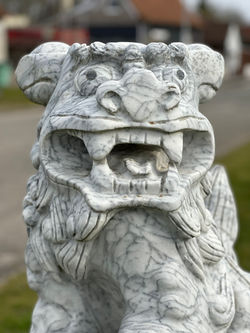
Today, here, in the heart of Nolette, the departed and history meet: a bronze statue, donated in 2023 by the Chinese community, now stands on a granite pedestal. Visible from afar, three Chinese workers have been immortalised at work — the first wielding a pickaxe, the second carrying a wooden railway sleeper, the third a stretcher, a summary of the tasks these men were assigned. Two marble guardian lions watch over a scene that might seem out of place in the middle of a small French village. Yet it reminds us that these men, once ostracised, now hold a place of honour within a community that pays them the tribute they deserve.
January 2026
Cimetière chinois de Nolette
Chemin rural
80860 Noyelles-sur-Mer
For a deeper understanding of the First World War in the Somme, don’t miss the Vignacourt 14-18 Interpretation Centre and the underground city of Naours.
CHAPTER 4
The Underground City of Naours
An Almost Forgotten World
Dive with me into the belly of the earth, where legend and fragments of memory intertwine. It is said that as early as the 9th century, the caves of Naours offered refuge from Viking invaders. More than just a shelter, this underground city is a true stone vessel launched through the ages. Follow me in the footsteps of the visionary abbot who awakened it from oblivion — the architect of a journey through the archipelagos of the past.
The Underground City of Naours: A Reality as Fascinating as Its Myths
While research has not confirmed the theory of Viking invasions, it has firmly dated the chalk quarrying to the 15th century, as well as the creation of a network of 28 passageways with 300 chambers and common rooms (about half of which can be visited today). Around 2,000 people could take shelter there with their livestock and harvests during times of conflict. The inhabitants organized this underground complex as a true village, with streets, squares, stables, living quarters, chapels, ventilation shafts, and chimneys that channeled smoke safely away from fire sources through a clever system of air vents — allowing them to mislead any approaching enemy. Thanks to this system of muches — hideaways as they are called in Picard — it was even possible to remain there for months in times of danger.


From Refugees to Smugglers: The Muches Through the Centuries
Over the centuries, the underground city repeatedly served as a place of refuge, notably during the Thirty Years’ War (1618–1648), a conflict deeply entwined with religious tensions. After this period, the muches were used by salt smugglers, who hid there to escape the gabelous, royal agents charged with collecting the gabelle, a state salt tax that was particularly high in northern France. This notoriously unjust tax, which regularly fueled uprisings, was finally abolished on March 1, 1790 by the National Constituent Assembly under Louis XVI. With the end of salt smuggling, the muches gradually faded from collective memory.
An Abbot Awakens the Forgotten City
It wasn’t until 1887 that this forgotten city was rediscovered by a passionate historian and archaeologist: the Abbé Ernest Danicourt (1846–1912), parish priest of Naours from 1885 until his death in 1912. He had begun archaeological research on the Gallo-Roman presence in the region. With the help of local villagers, he uncovered the entrance to the Naours quarry. Backed consistently by the local villagers, he devoted several years to clearing the galleries, unearthing everyday items, animal remains, fossils, and coins — and according to some accounts, even twenty gold coins. He worked to identify the various rooms and even named the galleries after surface streets to aid orientation.
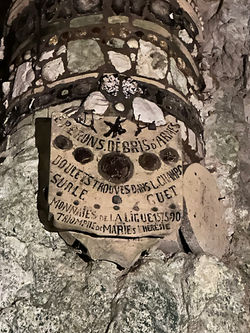
The fruits of his labor were recognized on July 3, 1893, when members of three learned societies – the French Archaeological Society (Société française d’archéologie), the Abbeville Emulation Society (Société d’émulation d’Abbeville), and the Society of Antiquaries of Picardy (Société des antiquaires de Picardie) – gathered in the underground city of Naours. A commemorative column still stands in memory of this event, inscribed: “In perpetual remembrance – July 3, 1893 – The Archaeological Congress of France, assembled in Abbeville for its 60th session, proceeds to visit the church and the underground structures.” Below are the names of the congress participants. From a forgotten site, the city thus became recognized heritage. Under Danicourt’s leadership, as he continued until his death to care for, develop, and promote the site, the underground city was opened to the public beginning in 1906.


 |  |  |
|---|---|---|
 |  |  |
 |  |  |
 |
33 Meters from the Present
The story told by the city of Naours and the atmosphere that pervades it have the power to captivate even someone who, like me, has a deep fear of confined spaces. I must confess, however, that without my friend Élisabeth’s invitation to accompany her, I would certainly have found some excuse to avoid the 33‑meter descent into the cool earth. One enters the underground city through a small house, to the left of which stands a stele from 1898 honoring the scientific disciplines called upon in the research carried out in the subterranean complex. Once through the door of the modest timber‑framed brick structure, the visitor is greeted by a portrait of Abbé Danicourt above a flight of tiered stairs, a sight that quickly dispels any notions of plummeting into bottomless chasms. Down below, the chalk walls feel so solid that the weight of tons of rock overhead is soon forgotten; and even though the ventilation shafts do not afford a view of the sky, they nonetheless have a reassuring effect. One begins to imagine the daily lives of those fugitives in these confined yet protective spaces.
Through the Ages with Abbé Danicourt
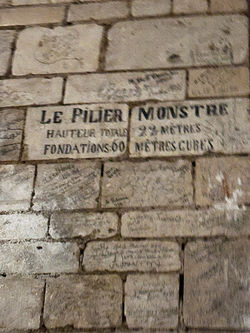
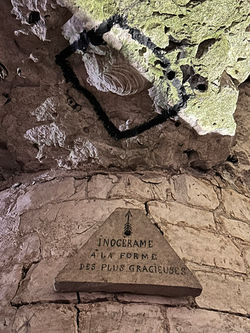
The underground city, a veritable time machine, carries us back to distant prehistoric eras. In his excavations, Abbé Danicourt made a point of highlighting all manner of fossils, outlining them in black paint so that no visitor on their “journey through the ages” would miss a single detail. Here and there, he peppered his findings with legends and explanations. For example, one reads inscriptions such as “Inoceramus of particularly graceful form”, a poetic description of a fossilized marine bivalve, “Form of chimney A and upper gallery B leading to a second vent C, which expelled smoke through chimney D of the miller’s cottage to deceive the enemy,” an illustrated explanation at the entrance to a passageway or “The monster pillarwork — total height 22 meters, foundations 60 cubic meters,” commenting on the support system of the rotunda, a vast chamber overseen by a statue of the Virgin, with the floor of a false chapel above it — a chapel that, seen from outside through the treetops on the hillside, appears real. Outside, the visitor will look in vain for a path to this charming faux building, for it is in fact not what it seems.
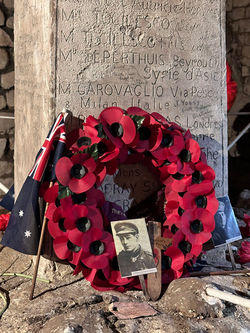
After so much open space, the visitor is compelled to proceed humbly, stooped — as if bowing to the ancient past that surrounds them — through a passage barely 1.6 meters high, finally arriving at a room dominated by a small obelisk commemorating the 1893 meeting of the three learned societies at Naours. The obelisk bears the names of the congress participants. Other eras make themselves heard in this room as well: fossils carefully framed in black paint by the Abbé testify to the site’s millennia‑old origins, while the graffiti left by Allied soldiers — here and there punctuated by a poppy or even an entire wreath — bring us back to a more recent past. Here, time becomes space and seems no longer insurmountable. Many visitors linger long before this rich tapestry of historical traces.
To leave this “crowd,” one simply proceeds to the Hall of Ancestors, then through the transverse gallery with its Christ on the Cross, followed by the museum of ancient crafts, which in turn leads to the interpretation center, gradually bringing visitors back to the present. The walls of the center are covered with portraits and photographs of young men smiling broadly, engaged in snowball fights, playing leapfrog, or climbing trees with the light‑heartedness and carefree spirit of childhood — as if the war raging just kilometers away had never occurred.
1915–1918: When the City Offered Respite to Allied Soldiers
During much of the First World War, the village of Naours lay about 30 km from the front line and became a haven for soldiers stationed in the Somme, on leave, or in transit. From 1915, the underground city became a sort of retreat, a “holiday destination” where British, Australian, Canadian, and New Zealand troops found distraction and brief escape from the horrors of war.
Between 1915 and 1918, they left behind some 3,000 graffiti: names, service numbers, regiments, dates, home towns, and personal messages, rediscovered in 2014 by archaeologist Gilles Prilaux of INRAP (the French National Institute for Preventive Archaeological Research). An interpretation center dedicated to these traveling soldiers opened in 2015, welcoming visitors at the cave exit and offering insights into the daily lives of the men who came to Naours seeking moments of relief and carefree time, as documented by numerous displayed photographs. The center also helped descendants of Allied soldiers trace evidence of their ancestors.
The City During the Second World War: A Chapter Still Shrouded in Mystery
The use of the caves during the Second World War remains unclear. Some accounts claim that the British established a fuel depot there at the beginning of the conflict, while the Germans are said to have used the site as a munitions depot and later as a defensive base between 1941 and 1943. These theories remain tentative due to a lack of solid evidence. As a result, this chapter in the history of the Naours caves is still largely unwritten — and awaits further research.
Und an der Oberfläche …
Es fällt schwer die unterirdische Stadt zu verlassen, wo die Vergangenheit so greifbar scheint, ohne sich zu wünschen, eines Tages erneut darin einzutauchen. Draußen überrascht die sommerliche Wärme und holt den Besucher nach und nach in die Wirklichkeit zurück. Ein Spaziergang durch den Park führt zunächst zu einem reizenden Wassermühlenhäuschen, flankiert von einem kleinen Teich und einer Miniaturinsel mit einer einzelnen Palme. Weiter geht es zu einem kleinen Streichelzoo mit Bauernhoftieren und einem Spielplatz. Dort erinnern Rutschen, Schaukeln und Kletternetze in Insektenform daran, dass auch die Entomologie zu den auf der Stele erwähnten wissenschaftlichen Disziplinen zählt. Einige Treppenstufen weiter, entlang eines Kletterwaldparcours und schattiger Wege, erreicht man schließlich eine Anhöhe, auf dem sich zwei hölzerne Bockwindmühlen erheben. Obwohl sie „importiert“ wurden – die eine stammt aus Linselles im Norden Frankreichs, die andere aus dem belgischen Stavele – erinnern sie auf dem Hügel „du Guet“ stolz an eine längst vergangene ländliche Kulturlandschaft. Erfüllt von all den Eindrücken kann der Besucher sich vor der Heimreise in der Brasserie des Muches erfrischen oder in der Souvenirboutique stöbern, die unter anderem die gläsernen Mohnblumen einer lokalen Kunsthandwerkerin in den Mittelpunkt stellt.
Um mehr über den Ersten Weltkrieg in der Somme zu erfahren, lohnt sich ein Besuch des chinesischen Friedhofs in Nolette sowie des Interpretationszentrum Vignacourt 14-16.
Dezember 2025


And on the Surface…
It is difficult to leave this crucible of the world’s history, where the past feels so tangible, without wishing to immerse oneself again one day. Outside, the warm summer air surprises and slowly brings the visitor back to reality. A walk through the park first leads to a charming watermill cottage, flanked by a small pond and a lone palm on a tiny island. Further along, a small petting zoo and a playground — where slides, swings, and insect‑shaped climbing nets remind visitors that entomology is among the scientific disciplines mentioned on the stele — extend the visit. A few steps, a high‑ropes course, and shaded paths finally lead to a promontory crowned with two wooden post mills. Although “imported”, one from Linselles in northern France and the other from Stavele in Belgium, they stand proudly on the Guet hill, evoking a rural cultural landscape long gone.
Filled with all these impressions, the visitor can refresh themselves at the Brasserie des Muches before departing, or browse the souvenir shop, which highlights, among other things, the glass poppies of a local artisan.


Brief Introduction to the Three Learned Societies
whose specialist and informed amateur members gathered in Naours in 1893, bringing national and regional scientific recognition to the underground city and contributing to the future valorization of this heritage.
1. Société française d’archéologie (French Archaeological Society)
Founded: 1834 by the Norman archaeologist, historian, and philanthropist Arcisse de Caumont. It is recognized as being of public utility.
Mission: The study and preservation of monuments and heritage, and the dissemination of knowledge through high‑quality scientific publications, including an annual bulletin and quarterly congress proceedings.
Website: www.sfa-monuments.fr
2. Société d’émulation d’Abbeville (French Archaeological Society)
Founded: On 13 Vendémiaire, Year VI (October 4, 1797) by several prominent local figures, including Eugène Pioger, its first president; Jules Boucher de Crèvecœur, father of Jacques Boucher de Perthes (a pioneer of prehistoric studies in France); and Adrien Tillette de Mautort.
Mission: The study and promotion of literature, science, and the arts, with a particular focus on local history, geography, and archaeology in Abbeville and its region. The society publishes books and an annual bulletin.
Website: www.societe-emulation-abbeville.com/présentation
3. Société des antiquaires de Picardie (Society of Antiquaries of Picardy)
Founded: In 1836 by historians and archaeologists from Amiens.
Mission: The study of the art and history of Picardy and Picard‑speaking regions from their origins to the present day. Recognized as being of public utility since 1851, the society currently has approximately 180 members. It was instrumental in the creation of the Picardie Museum, which it donated to the City of Amiens in 1869. The society publishes research and discoveries in its Mémoires and Bulletins.
Website: Société des Antiquaires de Picardie
Facebook: Société des Antiquaires de Picardie
Instagram: @societedesantiquairesdepicardie
Practical Information
Opening Hours:
-
July–August: daily, 10:00 am to 6:30 pm
-
April, May, June, September: 10:00 am to 5:30 pm (6:30 pm on weekends)
Closed on Mondays -
February–March: 10:00 am to 4:30 pm
Closed on Mondays -
October 1 to the end of the Zone B All Saints’ holiday: 10:00 am to 5:30 pm
Closed on Mondays -
Annual closure: from the end of the Zone B All Saints’ holidays until January 31 the following year.
Group Visits: Available for groups of 15 people or more, by reservation only.
Public Holidays: Closed on Easter Monday and May 1.
Last tour departure: 1 hour 30 minutes before closing time.
Guided and Audio‑Guided Tour Options
Audio guides are available in: French, English, Dutch, German, Spanish, and French Sign Language (each language available in both adult and child versions).
Visitor Recommendations
-
Temperature: approximately 9 °C. Bring warm clothing.
-
Low lighting: consider bringing a flashlight or using your smartphone light.
Cité souterraine de Naours
5 rue des Carrières
80260 Naours – Frankreich
📞 Tel.: +33 3 22 93 71 78
📧 Email: contact@citesouterrainedenaours.fr
🌐 Website: www.citesouterrainedenaours.fr
📘 Facebook: Cité souterraine de Naours
📷 Instagram: @citesouterrainedenaours
The underground passages of the site are currently closed for preservation and consolidation work, due not only to damage to the walls and deterioration of the graffiti caused by visitors’ proximity to certain walls, but also to natural erosion.
The rest of the site remains accessible, including the First World War interpretation centre, the ten-hectare park, the high ropes course and the mini-golf course.